1. Nuclear Reactions:
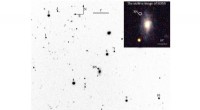
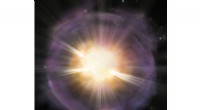
* Supernovae: The explosion of a massive star at the end of its life releases enormous amounts of energy, creating a burst of gamma rays.
* Neutron Star Mergers: When two neutron stars collide, the resulting explosion generates intense gamma rays.
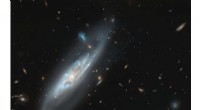
* Active Galactic Nuclei (AGN): Supermassive black holes at the centers of galaxies accrete matter, releasing tremendous energy, including gamma rays.
* Stellar Nucleosynthesis: Nuclear reactions within stars, such as the fusion of hydrogen into helium, can also produce gamma rays.
2. Cosmic Ray Interactions:
* Cosmic rays: High-energy particles, mostly protons, travel through space at near-light speeds. When they collide with atoms in the interstellar medium, they produce gamma rays.
3. Decay of Radioactive Elements:
* Radioactive decay: Some radioactive elements, like those found in supernova remnants, emit gamma rays as they decay.
4. Other Phenomena:
* Pulsar Wind Nebulae: These nebulae are powered by pulsars, rapidly rotating neutron stars that emit beams of high-energy radiation, including gamma rays.
* Gamma-Ray Bursts (GRBs): These are the most powerful explosions in the universe, releasing more energy in a few seconds than the Sun will emit in its entire lifetime. Their origin is still not fully understood, but they are thought to be associated with supernovae, neutron star mergers, or the collapse of massive stars.
5. Terrestrial Sources:
* Medical Equipment: Gamma rays are also used in medicine for diagnostic imaging and cancer treatment.
* Nuclear Weapons: Nuclear explosions release a large amount of gamma radiation.
Detection of Gamma Rays:
Gamma rays are detected by specialized telescopes and detectors, such as:
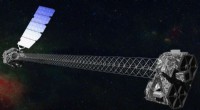
* The Fermi Gamma-ray Space Telescope: This telescope orbits Earth and observes the universe in gamma rays.
* The Compton Gamma Ray Observatory: This observatory, launched in 1991, made groundbreaking discoveries in gamma-ray astronomy.
* Ground-based observatories: Some observatories detect gamma rays by observing the atmospheric fluorescence they produce.
Studying gamma rays provides us with valuable insights into the most energetic processes in the universe, helping us understand the origins of elements, the evolution of stars, and the nature of black holes.