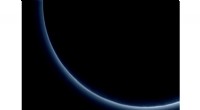
1. Planet: Planets are large, round objects that orbit a star. They are smaller than stars but larger than most moons.
2. Moon: Moons are natural satellites that orbit planets. They are generally much smaller than planets.
3. Star: Stars are giant balls of hot gas that produce light and heat through nuclear fusion. They are much larger and more massive than planets.
4. Neutron Star: These are incredibly dense remnants of collapsed stars. They are smaller than planets but have incredibly high mass.
5. Black Hole: Black holes are regions of spacetime where gravity is so strong that nothing, not even light, can escape. They are formed from the collapse of massive stars. Black holes are incredibly dense and can be incredibly massive.
Important Note: This is a simplified ordering. There are variations in size and mass within each category. For example, some planets are significantly larger than others, and some stars are much more massive than others.