1. Auroras: This is the most well-known effect. As the charged particles interact with the Earth's atmosphere, they excite atoms and molecules, causing them to emit light. This light manifests as the spectacular displays of the Northern Lights (Aurora Borealis) and the Southern Lights (Aurora Australis).
2. Geomagnetic storms: The influx of solar wind particles can disrupt Earth's magnetic field, leading to geomagnetic storms. These storms can interfere with radio communication, GPS navigation, and power grids.
3. Radio blackouts: Geomagnetic storms can also cause radio blackouts by disrupting the ionosphere, a layer of the atmosphere responsible for reflecting radio waves.
4. Satellite malfunctions: Charged particles from the solar wind can damage satellites and their electronics, potentially causing malfunctions.
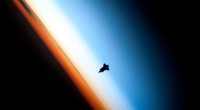
5. Increased radiation levels: The influx of charged particles can lead to higher radiation levels at high latitudes, posing a potential health risk to astronauts and polar explorers.
In summary, the interaction of charged particles from the Sun with Earth's magnetic poles can cause various phenomena, including auroras, geomagnetic storms, radio blackouts, satellite malfunctions, and increased radiation levels. These phenomena can be both beautiful and disruptive, highlighting the complex interaction between the Sun and Earth's magnetic environment.