Resonance is a phenomenon where a system (like a molecule) absorbs energy most effectively when the frequency of the incoming energy matches a natural vibration or oscillation within the system.
How it relates to light and molecules:
* Molecules have specific vibrational frequencies: Molecules are not rigid structures. Their atoms are connected by bonds that can stretch, bend, and rotate. These movements have specific frequencies.
* Light is electromagnetic radiation: Light carries energy in the form of oscillating electric and magnetic fields.
* Matching frequencies: When the frequency of light matches a natural vibrational frequency of a molecule, the molecule can absorb the energy from the light. This absorption causes the molecule to vibrate more strongly.
Examples:
* Infrared (IR) spectroscopy: IR spectroscopy uses light in the infrared region of the electromagnetic spectrum to study the vibrational modes of molecules. The absorption of specific frequencies of IR light reveals the presence of certain functional groups or bonds within the molecule.
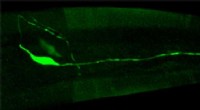
* Fluorescence: Some molecules, after absorbing light, release the energy as light of a different (usually lower) frequency. This phenomenon is used in fluorescent microscopy and other applications.
Key takeaway: When the frequency of light matches a natural frequency of a molecule, it can lead to absorption of energy and changes in the molecule's behavior. This principle is fundamental to many analytical techniques and has wide-ranging applications in chemistry, biology, and physics.