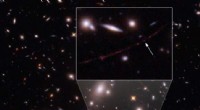
* Light travels as electromagnetic waves: Light doesn't need a medium to travel. It can move through the vacuum of space. Electromagnetic waves are disturbances in electric and magnetic fields that propagate at the speed of light.
* Sound needs a medium to travel: Sound travels as vibrations that move through matter (like air, water, or solids). It requires particles to bump into each other and transmit the vibrations. In the vacuum of space, there are no particles for sound to travel through.
Think of it this way:
* Imagine throwing a pebble into a pond. The ripples spread out on the surface of the water, which is the medium for the ripples.
* Light is like a ripple that can travel without needing a pond. It can move through the emptiness of space.
* Sound is like a ripple that needs a pond (or air, water, etc.) to exist.
Therefore, even though stars are very far away, we can see their light because it travels through the vast emptiness of space. But we cannot hear any sounds from stars because there is no medium in space for those sounds to travel through.