Space Physics:
* Focus: Studies the physical processes occurring in the space environment around Earth and other planets. This includes:
* Solar wind and its interactions with Earth's magnetosphere.
* Cosmic rays and their effects on the atmosphere.
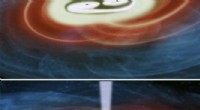
* Plasma physics in space, including magnetospheric dynamics and aurorae.
* Space weather and its impact on satellites and communication systems.
* Methods: Uses in-situ measurements from spacecraft, ground-based observatories, and theoretical models.
* Examples: Studying the aurora borealis, investigating the solar wind's influence on Earth's magnetic field, analyzing the interaction between cosmic rays and Earth's atmosphere.
Astrophysics:
* Focus: Studies the physical properties and evolution of celestial objects throughout the Universe, including:
* Stars, planets, galaxies, black holes, and nebulae.
* Formation and evolution of these objects.
* Cosmology and the origin of the Universe.
* Fundamental physics principles governing the cosmos.
* Methods: Utilizes a wide range of techniques, including telescopic observations across different wavelengths (radio, infrared, visible, ultraviolet, X-ray, gamma-ray), theoretical modeling, and computer simulations.
* Examples: Investigating the life cycle of stars, studying the formation of galaxies, exploring the properties of dark matter and dark energy.
In summary:
* Space physics focuses on the near-Earth space environment and its physical processes.
* Astrophysics focuses on the broader Universe and the physical properties and evolution of celestial objects.
Overlapping areas:
While space physics and astrophysics are distinct fields, they share some common areas of interest, such as:
* Solar physics: Studies the Sun and its activity, relevant to both fields.
* Space weather: Impacts Earth and other planets, studied by both space physics and astrophysics.
* Cosmic rays: Originate from outside the Solar System and are studied in both fields.
In essence, space physics is more focused on the "space weather" around planets, while astrophysics is concerned with the grander picture of the Universe and the fundamental laws governing it.