Astronomy:
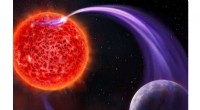
* Understanding stellar evolution: Analyzing the light from stars across different wavelengths allowed astronomers to understand their composition, temperature, and evolution. This led to breakthroughs in understanding stellar lifecycles, including the formation of stars, their various stages, and their eventual fate.
* Discovering new objects: Observations in the infrared, ultraviolet, X-ray, and gamma-ray regions revealed previously unseen objects like nebulae, black holes, and distant galaxies. This significantly expanded our knowledge of the universe and its constituents.
* Mapping the universe: The study of cosmic microwave background radiation, a remnant of the Big Bang observed in the microwave spectrum, helped us understand the early universe and its expansion.
Physics:
* Development of new telescopes: The discovery of different wavelengths of light led to the development of specialized telescopes for observing specific spectral regions. These telescopes, like radio telescopes, X-ray telescopes, and infrared telescopes, allowed us to study phenomena that were invisible to the human eye.
* Confirmation of theoretical models: Observations across the electromagnetic spectrum provided crucial data that validated theoretical models of stellar processes, nuclear fusion, and black hole physics.
* Advancement in spectroscopy: The study of starlight spectra revealed the presence of specific elements in stars, leading to advancements in spectroscopy and our understanding of atomic and molecular structure.
Technology:
* Development of new materials: The study of stellar spectra and their interactions with matter led to the development of new materials with specific properties for various applications.
* Improvement of communication technology: The understanding of electromagnetic radiation paved the way for innovations in radio communication, satellite communication, and wireless technology.
* Medical imaging: Medical imaging techniques like X-ray, MRI, and PET scans, which rely on different parts of the electromagnetic spectrum, revolutionized medical diagnosis and treatment.
Other Impacts:
* Space exploration: The knowledge gained from studying stellar emissions contributed significantly to the design and development of spacecraft, instrumentation, and mission planning for exploring our solar system and beyond.
* Environmental monitoring: Satellite-based observations of Earth's radiation in different wavelengths allow us to monitor climate change, pollution levels, and natural disasters.
These innovations, fueled by the discovery of stellar emissions across the electromagnetic spectrum, continue to shape our understanding of the universe and drive technological progress in various fields.