1. Mass-Energy Equivalence:
* This equation establishes that mass and energy are fundamentally equivalent. They are two forms of the same thing, and can be converted into one another. This was a revolutionary idea that challenged the traditional view of them as separate entities.
* It means that even a small amount of mass can be converted into a tremendous amount of energy, as the speed of light squared (c²) is a huge number.
2. Nuclear Energy:
* E=mc² is the foundation of nuclear energy. Nuclear reactions, like fission and fusion, involve the conversion of a tiny amount of mass into enormous amounts of energy. This principle is what powers nuclear power plants and nuclear weapons.
3. Understanding the Universe:
* The equation helps us understand phenomena like:
* The Sun's Energy: The Sun's energy comes from nuclear fusion, where hydrogen atoms fuse to form helium, with a small amount of mass being converted into energy.
* The Formation of Stars and Galaxies: Stars form from collapsing clouds of gas and dust. The gravitational potential energy of this collapse is converted into heat and radiation, leading to the ignition of nuclear fusion.
4. Particle Physics:
* In particle physics, E=mc² is crucial for understanding the interactions between particles and the creation and annihilation of particles.
5. Technological Advancements:
* Beyond nuclear energy, E=mc² has influenced:
* Medical Imaging: Positron Emission Tomography (PET) scans rely on the principle of matter-antimatter annihilation.
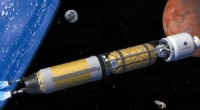
* Space Exploration: Rockets use the principle of mass conversion to generate thrust.
6. Philosophical Implications:
* E=mc² has also sparked philosophical debates about the nature of reality, the relationship between matter and energy, and the implications of the vastness of the universe.
In summary:
E=mc² is not just a mathematical equation; it's a fundamental principle that has revolutionized our understanding of the universe and led to significant technological advancements. It continues to be a cornerstone of modern physics and a source of ongoing scientific exploration.