1. Weather Satellites:
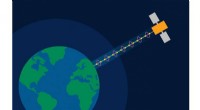
* Geostationary Satellites: These orbit the Earth at the same speed as the planet's rotation, providing continuous images of a specific region. They capture data like cloud formation, movement, and temperature, which are essential for tracking storms.
* Polar-Orbiting Satellites: These orbit the Earth from pole to pole, providing global coverage. They offer detailed information about storm structure, precipitation intensity, and wind speeds.
2. Doppler Radar:
* This technology uses radio waves to detect the movement of precipitation within a storm. By analyzing the changes in the frequency of the reflected waves, radar can determine wind speed and direction, as well as the location and intensity of precipitation.
3. Weather Balloons:
* These instruments are launched twice a day from weather stations around the world. They carry sensors that measure temperature, pressure, humidity, and wind speed and direction at different altitudes. This data helps create vertical profiles of the atmosphere, which are important for understanding storm formation and development.
4. Surface Observations:
* Weather stations on the ground collect data on temperature, pressure, humidity, wind speed, and precipitation. These observations provide crucial information about local conditions, which can be combined with data from other sources to create a more complete picture of storm activity.
5. Numerical Weather Prediction Models:
* These complex computer models use mathematical equations to simulate atmospheric processes. They incorporate data from various sources, including satellites, radar, weather balloons, and surface observations, to predict storm development and movement.
6. Aircraft Reconnaissance:
* In some cases, scientists may fly specially equipped aircraft into storms to collect data directly. This allows for detailed measurements of wind speed, precipitation, and other parameters within the storm itself.
By combining data from these various methods, scientists can create comprehensive analyses of storms, including their starting point, direction, speed, and intensity. This information is crucial for forecasting and issuing warnings to protect life and property.