1. Protons (about 89%): These are the nuclei of hydrogen atoms, the most common element in the universe.
2. Helium nuclei (about 9%): These are also known as alpha particles.
3. Other atomic nuclei (about 1%): These include heavier nuclei like carbon, oxygen, iron, and even heavier elements.
4. Electrons (about 1%): These are negatively charged particles.
5. Neutrinos: These are neutral particles that interact very weakly with matter.
6. Gamma rays: These are high-energy photons.
Origins of Cosmic Rays:
The origins of cosmic rays are still being investigated, but they are thought to originate from a variety of sources, including:
* Supernova explosions: These massive explosions of dying stars release enormous amounts of energy and particles.
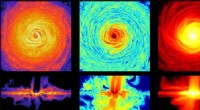
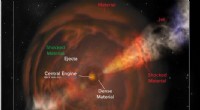
* Active galactic nuclei (AGN): These are galaxies with supermassive black holes at their centers, which emit powerful jets of particles.
* Pulsars: These are rapidly rotating neutron stars that emit beams of radiation.
* Solar flares: These are sudden bursts of energy from the Sun's surface that can accelerate particles.
* Cosmic ray interactions: Cosmic rays can collide with atoms in interstellar space, producing new particles.
Effects of Cosmic Rays:
Cosmic rays have a significant impact on Earth and its atmosphere. They can:
* Ionize the atmosphere: This can lead to the formation of auroras.
* Damage satellites and spacecraft: High-energy particles can damage electronics and other materials.
* Contribute to the evolution of life: Some scientists believe that cosmic rays may have played a role in the origin of life on Earth.
The study of cosmic rays is an important field of research in astrophysics, as it provides insights into the nature of the universe and its evolution.