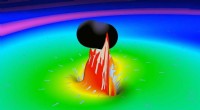
* Photoelectric Effect: In 1905, Einstein explained the photoelectric effect. This phenomenon describes how light can knock electrons loose from metal surfaces. His explanation, using the idea of light behaving as quantized packets of energy called photons, revolutionized our understanding of light and laid the groundwork for quantum mechanics. This was crucial to understanding the interaction of radiation with matter.
* Mass-Energy Equivalence: His famous equation E=mc² explains the relationship between mass and energy. This equation, published in 1905, demonstrates that mass can be converted into energy and vice versa. It has enormous implications for understanding nuclear reactions and processes like nuclear fission and fusion, which involve the release of tremendous amounts of energy through the conversion of mass.
* Understanding Radioactivity: While Einstein did not directly study radioactivity, his work on the photoelectric effect and mass-energy equivalence contributed to the theoretical framework for understanding radioactive decay and the nature of nuclear processes.
In summary:
Einstein's theories were instrumental in explaining the fundamental nature of light and its interactions with matter, as well as the relationship between mass and energy. These theories played a crucial role in understanding the behavior of radiation and its implications in areas like nuclear physics and energy production.