1. Scattering:
* Sunlight is made up of all the colors of the rainbow.
* When sunlight enters the atmosphere, it collides with tiny particles like air molecules and dust.
* This scattering, called Rayleigh scattering, is more effective at scattering shorter wavelengths of light (blue and violet) than longer wavelengths (red and orange).
2. Longer Path:
* As the sun sets, its light has to travel a longer path through the atmosphere to reach our eyes.
* The longer path means that more blue and violet light gets scattered away, leaving behind the longer wavelengths.
3. Atmospheric Conditions:
* The presence of dust, water vapor, and other particles in the atmosphere can enhance the scattering of shorter wavelengths.
* This is why sunsets often appear more vibrant and colorful after a volcanic eruption or forest fire, which release large amounts of dust particles into the air.
4. The Result:
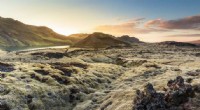
* When only the longer wavelengths of red and orange light remain, the sky appears red at sunset.
* The same principle applies to sunrises, but the scattering effect is less pronounced because the sunlight is not traveling through as much atmosphere.
In summary, red sunsets occur due to the scattering of sunlight by atmospheric particles, which preferentially removes shorter wavelengths of light, leaving behind the longer wavelengths that we perceive as red and orange.