1. The Sun:
* A star, the largest and most massive object in our solar system.
* It's a giant ball of hot, glowing gas (mostly hydrogen and helium) that generates light and heat through nuclear fusion.
2. Planets:
* Eight planets orbit the Sun in elliptical paths.
* They are categorized into two groups:
* Inner planets: Mercury, Venus, Earth, Mars (rocky and dense)
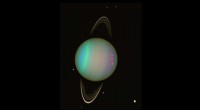
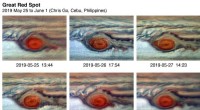
* Outer planets: Jupiter, Saturn, Uranus, Neptune (gas giants with large atmospheres)
3. Dwarf Planets:
* Similar to planets but smaller and haven't cleared their orbital paths of other objects.
* Examples include Pluto, Ceres, Eris, Makemake, and Haumea.
4. Moons:
* Natural satellites orbiting planets.
* Earth has one moon, while others like Jupiter and Saturn have dozens.
5. Asteroids:
* Rocky, irregularly shaped objects mostly found in the asteroid belt between Mars and Jupiter.
* Some asteroids can be quite large, while others are just small pebbles.
6. Comets:
* Icy bodies with a tail of gas and dust that forms as they approach the Sun.
* They come from the Kuiper Belt and Oort Cloud far beyond Neptune.
7. Meteoroids:
* Small rocky or metallic objects that orbit the Sun.
* They become meteors (shooting stars) when they enter Earth's atmosphere.
8. Dust and Gas:
* Scattered throughout the solar system, forming thin atmospheres around some planets and moons.
9. Rings:
* Composed of dust and ice particles orbiting planets like Saturn.
This is just a brief overview of the types of bodies in our solar system. Each category has further subdivisions, and astronomers are continually discovering new objects and phenomena.