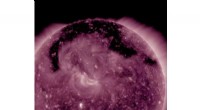
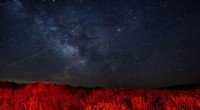
* Stars are giant balls of hot gas that produce their own light and heat through nuclear fusion. This process combines lighter elements, like hydrogen, into heavier elements, like helium, releasing enormous amounts of energy.
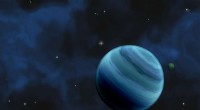
* Planets are celestial bodies that orbit stars and do not generate their own light or heat. They reflect light from their parent star, making them visible to us.
Here's a table summarizing the key differences:
| Feature | Star | Planet |
|---|---|---|
| Energy source | Nuclear fusion | Reflects light from a star |
| Light emission | Emits its own light | Reflects light from a star |
| Heat production | Generates its own heat | Absorbs heat from a star |
| Size | Typically much larger than planets | Smaller than stars |
| Composition | Mostly hydrogen and helium | Varies widely, can include rock, gas, ice |
| Formation | Formed from collapsing clouds of gas and dust | Formed from leftover material in a protoplanetary disk around a star |
It's important to note that there can be some overlap between these categories. For example, brown dwarfs are sometimes called "failed stars" because they are not massive enough to sustain nuclear fusion. However, they are still much larger than planets.