1. Monitoring Earth's Environment:
* Climate Change: Satellites track changes in Earth's temperature, ice cover, and sea level, providing crucial data for studying climate change and its impacts.
* Weather Forecasting: Weather satellites provide real-time images of cloud formations, precipitation patterns, and wind speeds, improving weather forecasts and warning systems.
* Air Quality: Satellites measure the levels of pollutants like ozone, carbon monoxide, and sulfur dioxide, helping us understand air pollution and its sources.
2. Observing Earth's Surface:
* Mapping and Land Cover: Satellites capture detailed images of Earth's surface, enabling us to create maps, monitor land use, and track deforestation.
* Natural Disasters: Satellites provide valuable data for monitoring and responding to natural disasters like earthquakes, floods, and volcanic eruptions.
* Resource Management: Satellites monitor agricultural yields, water resources, and mineral deposits, helping us manage these resources sustainably.
3. Studying Earth's Atmosphere and Oceans:
* Atmospheric Composition: Satellites measure the concentrations of various gases in the atmosphere, helping us understand atmospheric chemistry and the ozone layer.
* Ocean Currents and Temperature: Satellites track ocean currents, temperature, and salinity, providing insights into ocean circulation and climate patterns.
* Sea Level Rise: Satellites measure changes in sea level over time, providing evidence of rising sea levels and their potential impacts.
4. Understanding Earth's History:
* Geological Formations: Satellites can identify and map geological formations, providing information about Earth's past and how it has evolved.
* Paleoclimate Research: Satellites help us study ancient climate patterns by analyzing the composition of ice cores and sediment layers.
5. Supporting Human Activities:
* Navigation and Communication: GPS satellites provide precise location data for navigation, while communication satellites enable global communication.
* Search and Rescue: Satellites assist in search and rescue operations by providing real-time images and communication capabilities.
Space Probes, specifically, offer additional insights by:
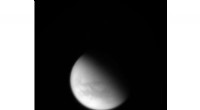
* Studying other planets: By comparing Earth to other planets, we gain a deeper understanding of our own planet's unique characteristics and evolution.
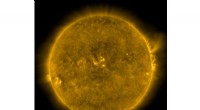
* Studying the Sun: Space probes like SOHO and Parker Solar Probe provide data on the Sun's activity, solar flares, and the solar wind, which affect Earth's atmosphere.
In summary, satellites and space probes act as our eyes in the sky, providing invaluable information that helps us understand Earth's complex systems, monitor its changing environment, and manage its resources for a sustainable future.