1. Heliocentric Model: Galileo was a strong supporter of the heliocentric model of the universe, proposed by Nicolaus Copernicus. This model placed the Sun at the center of the universe, with the Earth and other planets revolving around it. He observed the phases of Venus, which strongly supported the heliocentric model, as these phases are only possible if Venus orbits the Sun.
2. Earth's Rotation: Galileo believed that the Earth rotated on its axis, causing day and night. He observed the motion of sunspots, which seemed to move across the Sun's surface. This observation, he argued, was evidence of the Earth's rotation.
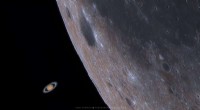
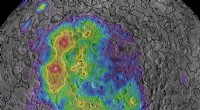
3. Moon's Surface: Galileo used his telescope to observe the Moon's surface in detail. He saw mountains, valleys, and craters, challenging the prevailing belief that the Moon was a smooth, perfect sphere. This discovery shattered the long-held idea of celestial bodies being perfect and unchanging.
4. The Milky Way: He observed the Milky Way and saw that it was composed of countless stars, further challenging the belief that the universe was limited to the few visible stars.
5. The Universe is Vast: Through his observations, Galileo concluded that the universe was vast and contained countless stars and planets. He believed that the universe was not a finite sphere with Earth at the center, as was believed by the Church.
6. The Importance of Observation: Galileo emphasized the importance of direct observation and experimentation in understanding the universe. He challenged the traditional reliance on ancient texts and authority figures, instead advocating for a scientific approach based on empirical evidence.
Impact of Galileo's Beliefs:
Galileo's beliefs, though revolutionary, caused him conflict with the Catholic Church, which held the geocentric view of the universe. His work was considered heretical and he was eventually condemned and placed under house arrest. However, his observations and ideas eventually paved the way for modern astronomy and the scientific revolution.
In conclusion, Galileo's beliefs about the universe fundamentally changed our understanding of the cosmos. His observations and ideas not only revolutionized astronomy but also shaped the future of scientific inquiry.