* Earth: Solid, heavy, and the foundation of the world.
* Water: Liquid, wet, and flowing.
* Air: Gaseous, light, and invisible.
* Fire: Hot, dry, and volatile.
This theory wasn't just about the Earth itself, but also the heavens. They believed:
* The Earth was composed mainly of the element Earth.
* The atmosphere was made up of Air.
* The celestial bodies, like the Sun and Moon, were composed of Fire.
* The space between celestial bodies was filled with Aether, a fifth element thought to be lighter and purer than the other four.
This concept was a brilliant attempt to explain the world around them, based on observations and logical deduction. It dominated philosophical and scientific thought for centuries.
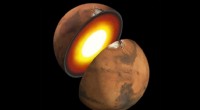
However, it was ultimately incorrect. We now know that the Earth is composed of numerous elements, with iron, oxygen, silicon, and magnesium being the most abundant. The atmosphere is a complex mixture of gases, and the celestial bodies are composed of different materials, including hydrogen, helium, and heavier elements.
While the Four Element Theory may seem simplistic today, it was a powerful and influential concept in its time. It served as a foundation for further scientific exploration and paved the way for our modern understanding of the universe.