Here's why:
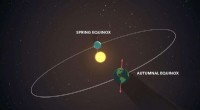
* Declination: This is the angular distance of the sun north or south of the celestial equator. It changes throughout the year, reaching a maximum of +23.45 degrees (Tropic of Cancer) in June and a minimum of -23.45 degrees (Tropic of Capricorn) in December.
* Vertical Rays: When the sun's rays hit the Earth directly, they are perpendicular to the Earth's surface. This happens at the latitude that matches the sun's declination at that moment.
Therefore, to find the latitude where the sun's rays are vertical, you need to know the sun's declination at that particular time.
Example:
If the sun's declination is +20 degrees, then the sun's rays will be vertical at 20 degrees North latitude.
Note: The sun's declination can be found using astronomical data or online calculators.