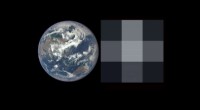
* Earth's Rotation: Our planet spins on its axis, completing a full rotation roughly every 24 hours. This rotation causes the apparent movement of celestial objects across the sky, including the Sun, Moon, and planets.
* Perspective: As the Earth turns, our perspective of the sky changes. When a planet is on the side of the Earth facing the Sun, it appears high in the sky. As the Earth rotates, that same planet moves towards the side of Earth facing away from the Sun, making it appear lower in the sky and eventually causing it to "set" below the horizon.
* Orbital Paths: While the Earth rotates, the planets also orbit the Sun. This orbital motion adds a slight complexity. As planets orbit the Sun, their positions relative to the Earth change over time. This change in position affects their apparent path across the sky, influencing when they rise and set.
In short, the rising and setting of planets is a combination of Earth's rotation and the planets' own orbits around the Sun, creating the illusion of movement across our sky.