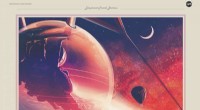
Saturn also exhibits banding in its atmosphere, although it is less prominent than on Jupiter. The bands are primarily composed of ammonia ice crystals and are thought to be influenced by Saturn's rapid rotation.
While not as pronounced as on Jupiter and Saturn, Uranus and Neptune also have banded atmospheres. However, these bands are less distinct and are more subtle in appearance.
Other planets in our solar system, such as Earth, Mars, and Venus, do not have banded layered atmospheres.
It's important to note that the banding in these giant planets is not static. The bands can change over time due to various atmospheric processes like storms, jets, and variations in temperature and pressure.