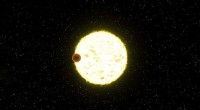
1. Solar Energy: The sun provides the energy that drives the water cycle. Its radiant energy warms the Earth's surface, causing water to evaporate from oceans, lakes, rivers, and even the ground.
2. Evaporation: As water evaporates, it turns into water vapor, a gas that rises into the atmosphere.
3. Condensation: As the warm, moist air rises, it cools. Cooler air cannot hold as much moisture, so the water vapor condenses back into tiny water droplets, forming clouds.
4. Cloud Formation: The condensed water droplets in the clouds collide and grow larger. Eventually, they become too heavy to remain suspended in the air.
5. Precipitation: The water droplets fall back to Earth as rain, snow, sleet, or hail, depending on the temperature.
In summary:
* The sun provides the energy for evaporation, the first step in the water cycle.
* The sun's energy drives atmospheric circulation, which influences cloud formation and precipitation patterns.
Therefore, while the sun's energy is essential for the water cycle and rain formation, it's not directly causing the rain itself. The rain is a result of the complex interplay of evaporation, condensation, and atmospheric processes driven by the sun's energy.