* Vast Distances: Stars are incredibly far away. Even our closest stellar neighbor, Proxima Centauri, is over 4 light-years away. That's so far that if you could travel at the speed of light, it would take you over four years to reach it.
* Size and Brightness: Most stars are much larger than our Sun, but they also appear incredibly small from Earth due to their distance. To get a "close-up" view, you'd need a powerful telescope and even then, you wouldn't see details like we see on the Moon or planets.
* Heat and Radiation: Stars are incredibly hot, emitting intense heat and radiation. Being close to a star would be incredibly dangerous and likely impossible to survive.
What we can observe and learn about stars:
* Telescopes: Telescopes allow us to see stars in more detail, revealing their colors, surface activity, and sometimes even their atmospheres.
* Spectroscopy: Analyzing the light from stars tells us their composition, temperature, and even their motion.
* Computer Models: Scientists use complex computer models to simulate the behavior of stars, providing insights into their internal structure and evolution.
So, what would a close-up view of a star actually look like?
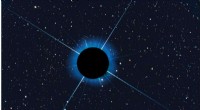
* Imagine a giant ball of superheated gas, glowing intensely, with swirling plasma and powerful magnetic fields. This is what we believe stars look like from "up close".
While we can't actually get a "close-up" view in the traditional sense, science allows us to learn and understand these celestial objects in amazing detail.