1. Gravity:
* The Sun's immense mass exerts a gravitational pull on Earth, keeping it in orbit. This force is what keeps Earth from flying off into space.
* Earth's gravity also affects the Sun, though much less significantly due to Earth's smaller mass.
2. Energy Transfer:
* The Sun is a giant nuclear fusion reactor, constantly releasing energy in the form of light and heat. This energy travels through space as electromagnetic radiation.
* Earth receives a tiny fraction of this energy, known as solar radiation, which is essential for life.
* This radiation is absorbed by the Earth's surface, atmosphere, and oceans, causing warming and driving weather patterns.
3. Electromagnetic Radiation:
* The Sun emits various types of electromagnetic radiation, including visible light, infrared radiation (heat), ultraviolet radiation, and X-rays.
* Earth's atmosphere absorbs and reflects some of this radiation, protecting life from harmful radiation like X-rays and most ultraviolet rays.
* The Earth's magnetic field also deflects charged particles from the Sun, known as the solar wind, protecting us from solar storms.
4. Earth's Seasons:
* The Earth's tilted axis causes different parts of the planet to receive varying amounts of solar radiation throughout the year.
* This variation in solar energy input leads to the seasons, with warmer temperatures when the hemisphere is tilted towards the Sun and cooler temperatures when tilted away.
5. Solar Activity:
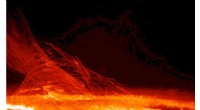
* The Sun undergoes periods of increased activity, known as solar cycles, which can affect Earth.
* During solar flares and coronal mass ejections, bursts of energy and charged particles can disrupt communication systems and even cause power outages on Earth.
In conclusion, the Earth and Sun are inextricably linked, with the Sun's energy being fundamental to life on Earth and its gravity keeping us in orbit. Their constant interaction shapes our climate, weather, and even our very existence.