The Nebular Hypothesis is the prevailing scientific theory explaining the formation of our solar system. It suggests that the solar system formed from a giant cloud of gas and dust called a solar nebula. This hypothesis is supported by extensive observational evidence and simulations.
Here is a step-by-step breakdown:
1. The Beginning:
* A vast, rotating cloud of gas and dust, mostly hydrogen and helium, exists in interstellar space.
* This cloud is called a solar nebula and is very cold and diffuse.
2. Collapse and Heating:
* A trigger, possibly a shockwave from a nearby supernova, causes the nebula to collapse.
* As the nebula collapses, it spins faster due to the conservation of angular momentum.
* The center of the nebula heats up as gravity compresses the gas and dust.
3. Formation of the Protostar:
* The core of the collapsing nebula becomes extremely hot and dense.
* It starts to glow and is now called a protostar.
* The protostar continues to grow as it attracts more material from the surrounding nebula.
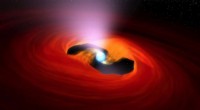
4. Accretion Disk Formation:
* The remaining gas and dust in the nebula flattens into a disk around the protostar due to centrifugal force.
* This disk is called an accretion disk, and it is rich in various elements and compounds.
5. Planetary Formation:
* Within the accretion disk, dust grains begin to clump together due to electrostatic forces.
* These clumps grow larger by attracting more dust and gas, forming planetesimals.
* Planetesimals continue to collide and merge, eventually forming protoplanets.
* The inner planets (Mercury, Venus, Earth, Mars) are mostly rocky, formed in the hotter, inner regions of the accretion disk where volatile materials like water and methane evaporated.
* The outer planets (Jupiter, Saturn, Uranus, Neptune) are mostly gas giants, formed in the colder, outer regions where volatile materials could remain.
6. Clearing of the Disk:
* The protostar eventually becomes hot and luminous enough to emit strong stellar winds.
* These winds push away the remaining gas and dust in the accretion disk, clearing the area around the new star.
7. The Solar System is Born:
* The protostar has become the Sun, and the planets, moons, asteroids, and comets have formed around it.
* The solar system continues to evolve over time, with interactions between planets and the Sun influencing its structure.
Key Points to Remember:
* The Nebular Hypothesis is a comprehensive theory explaining the formation of our solar system.
* It is supported by observations and simulations.
* The process of planetary formation is a gradual one, involving numerous collisions and mergers.
* The Sun is a star, and it is the dominant gravitational force in our solar system.
Further Exploration:
* You can learn more about the Nebular Hypothesis by researching online resources like NASA websites and scientific journals.
* There are also many books and documentaries dedicated to explaining the formation of the solar system.
* Observing the night sky with a telescope can provide a glimpse into the vastness and beauty of the cosmos.