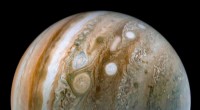
Here's what the surface of Jupiter looks like:
* Stripes and Zones: The most striking feature is the presence of alternating dark bands (belts) and light zones that wrap around the planet. These are caused by differences in temperature and wind patterns. The belts are warmer and darker, while the zones are cooler and lighter.
* The Great Red Spot: This iconic storm is a giant, swirling vortex that has been raging for hundreds of years. It's so large that it could fit several Earths inside.
* Whirlpools and Storms: Jupiter's atmosphere is constantly in motion, with numerous smaller storms and whirlpools. These can be white, brown, or even red, depending on the composition of the clouds.
* Turbulent and Dynamic: The atmosphere is incredibly turbulent and dynamic, with winds reaching speeds of hundreds of miles per hour. This creates a constantly changing and visually stunning surface.
What you won't see:
* Solid ground: As mentioned earlier, there's no solid surface to stand on. If you were to fall into Jupiter's atmosphere, you would be crushed by the immense pressure and eventually dissolved by the gases.
* Clear sky: Jupiter's atmosphere is very thick and filled with clouds, making it impossible to see through to any underlying layers.
Overall, the surface of Jupiter is a mesmerizing spectacle of swirling colors, dynamic storms, and a constant reminder of the immense power of nature. It's a place of extreme weather and chaotic beauty, unlike anything found on Earth.