1. Radial Velocity Method (Doppler Spectroscopy)
* How it works: This method detects the wobble in a star caused by the gravitational pull of an orbiting planet. As the planet orbits, it pulls the star slightly towards it, causing a slight Doppler shift in the star's light. This shift is measured by analyzing the star's spectrum.
* Advantages: Highly successful for finding large planets close to their stars.
* Disadvantages: Less effective for finding smaller planets or planets far from their stars.
2. Transit Method
* How it works: This method observes a slight dip in a star's brightness as a planet passes in front of it (transits). This dip is proportional to the planet's size relative to the star.
* Advantages: Can find planets of different sizes and distances from their stars.
* Disadvantages: Requires the planet's orbit to be aligned so that it transits from our perspective.
3. Direct Imaging
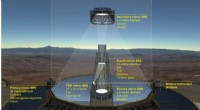
* How it works: This method involves taking a picture of the planet directly, using a powerful telescope and advanced imaging techniques.
* Advantages: Can provide detailed information about the planet's atmosphere and composition.
* Disadvantages: Extremely challenging, as planets are much fainter than their host stars. Requires large telescopes and sophisticated imaging techniques.
4. Microlensing
* How it works: This method uses the gravitational lensing effect, where a massive object (like a star or planet) bends the light from a background star, creating a temporary brightening event. The duration and intensity of the brightening can reveal the presence and characteristics of the lensing object.
* Advantages: Can detect planets at large distances and even planets without stars (rogue planets).
* Disadvantages: Events are rare and short-lived, making them challenging to observe.
5. Astrometry
* How it works: This method measures the slight wobble of a star caused by the gravitational pull of an orbiting planet. It looks for the small changes in the star's position in the sky over time.
* Advantages: Can be used to find planets at larger distances from their stars.
* Disadvantages: Technically very challenging, as the wobble is extremely small.
Other methods:
* Timing method: This method detects changes in the timing of pulses emitted by pulsars (rapidly spinning neutron stars), indicating the presence of a companion planet.
* Disk Substructures: Observing gaps, rings, or other structures in protoplanetary disks surrounding young stars can suggest the presence of planets.
The discovery of exoplanets is an ongoing process, and scientists are constantly developing new techniques and improving existing ones to uncover more secrets about the universe.