Features on the Photosphere:
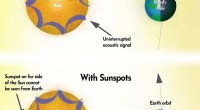
* Sunspots: Darker, cooler areas on the photosphere caused by intense magnetic fields. They appear dark because they are cooler than the surrounding photosphere.
* Granules: Small, bright, and constantly changing features on the photosphere. They are caused by convection currents carrying hot plasma from the Sun's interior to the surface.
* Faculae: Bright, elongated features on the photosphere that appear near sunspots. They are hotter than the surrounding photosphere and are also associated with magnetic fields.
Features in the Chromosphere:
* Spicules: Short-lived, jet-like eruptions of plasma that extend upward from the chromosphere. They are associated with magnetic fields.
* Plages: Bright areas in the chromosphere associated with sunspots and faculae.
* Filaments: Dark, ribbon-like structures that appear in the chromosphere. They are actually prominences seen from the side, and they are composed of cool, dense plasma suspended above the chromosphere by magnetic fields.
Features in the Corona:
* Prominences: Large, bright loops of plasma that extend outward from the chromosphere into the corona. They are held in place by magnetic fields.
* Coronal Mass Ejections (CMEs): Giant eruptions of plasma and magnetic fields from the Sun's corona. They can travel outward at speeds of millions of kilometers per hour.
* Solar Flares: Intense bursts of energy that occur in the corona. They can release as much energy as billions of hydrogen bombs.
Other Notable Features:
* Solar Wind: A continuous stream of charged particles that flow outward from the Sun.
* Solar Cycle: An approximately 11-year cycle during which the Sun's activity, including the number and size of sunspots, varies.
These features provide us with a glimpse into the Sun's dynamic and energetic nature. Studying them helps us understand the Sun's internal workings and its impact on Earth and the solar system.