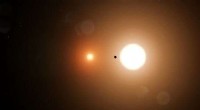
* Apparent Brightness: This is how bright an object appears to us on Earth. It depends on both the object's actual luminosity and its distance. A very luminous object far away can appear the same brightness as a dim object close by.
* Luminosity: This is the actual amount of light an object emits. It's a fundamental property of the object itself, not affected by distance.
How Scientists Use Brightness:
1. Standard Candles: Certain types of astronomical objects, like Cepheid variable stars and Type Ia supernovae, have a known, predictable luminosity. By comparing their apparent brightness with their known luminosity, scientists can calculate their distance.
2. Parallax: This method uses the slight shift in an object's apparent position as the Earth orbits the Sun. The larger the shift, the closer the object. Parallax works for relatively nearby stars.
3. Redshift: This method uses the fact that light from distant objects is stretched, shifting towards red wavelengths, due to the expansion of the universe. The amount of redshift is directly related to the distance of the object.
Key Points:
* Apparent size is unreliable for distance: A large object far away can look the same size as a small object nearby.
* Luminosity is key: By knowing the actual brightness of an object, scientists can compare it to how bright it appears and calculate its distance.
Let me know if you'd like more details on any of these methods!