The universe is a vast and complex entity, defined by its dimensions in time, distance, and its intricate organization. Here's a breakdown of each aspect:
Time:
* Age: The universe is approximately 13.8 billion years old, as determined by the cosmic microwave background radiation.
* Expansion: Since the Big Bang, the universe has been expanding at an accelerating rate. This expansion affects the measurement of time itself, leading to phenomena like time dilation.
* Non-linearity: Time is not linear in the universe. The fabric of spacetime is warped by gravity, causing time to pass differently depending on location and gravitational fields.
Distance:
* Vastness: The observable universe spans an estimated 93 billion light-years, making it incredibly vast and beyond human comprehension.
* Expanding distances: The expansion of the universe is stretching space itself, causing the distances between galaxies to increase over time.
* Relativity: Distance is not absolute in the universe. Due to relativity, the distance between two points can vary depending on the observer's frame of reference and speed.
Organization:
* Hierarchical structure: The universe is organized in a hierarchical manner, starting from subatomic particles, forming atoms, molecules, stars, galaxies, and clusters of galaxies.
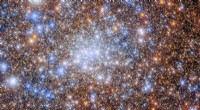
* Gravity: The primary force governing the organization of the universe is gravity, which pulls matter together to form larger structures like galaxies and star clusters.
* Cosmic web: The distribution of matter in the universe is not uniform. Instead, it forms a vast cosmic web of interconnected filaments and voids, with galaxies concentrated along the filaments.
* Dynamic and evolving: The universe is not static but constantly evolving. Stars are born, live, and die, galaxies collide and merge, and new structures are continually forming.
Important Considerations:
* Our understanding of the universe is incomplete: Our understanding of the universe is still evolving, and new discoveries are constantly being made.
* Cosmic mystery: There are many mysteries about the universe that remain unsolved, such as the nature of dark matter and dark energy, and the ultimate fate of the universe.
In summary, the universe is a vast, dynamic, and complex entity defined by its vastness in both time and distance, its hierarchical structure, and its continuous evolution.