1. A Global Magnetic Field: This is the most important ingredient. The magnetic field acts like a shield, deflecting charged particles from the Sun (solar wind) away from the planet. However, some particles get trapped in the magnetic field lines and travel towards the poles, creating auroras.
2. An Atmosphere: The charged particles from the solar wind interact with the atoms and molecules in the atmosphere, causing them to become excited. As these excited atoms and molecules return to their ground state, they release energy in the form of light, creating auroras.
3. A Source of Charged Particles: The Sun is the primary source of charged particles (the solar wind) that cause auroras. However, other sources, like volcanic eruptions or other stellar events, could also contribute.
4. Suitable Atmospheric Composition: While any atmosphere can interact with charged particles, the composition of the atmosphere affects the color of the aurora. For example, oxygen produces green and red auroras, while nitrogen produces blue and purple.
Examples:
* Earth: Has a strong magnetic field and an atmosphere rich in oxygen and nitrogen, making it famous for its vibrant auroras, known as the Northern and Southern Lights.
* Jupiter: Has a massive magnetic field and a thick atmosphere, resulting in the most powerful auroras in our solar system, visible even in visible light.
* Saturn: Also has a strong magnetic field and an atmosphere, leading to auroras visible in ultraviolet light.
Planets that don't have auroras:
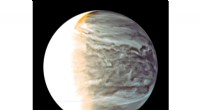
* Venus: Has a very weak magnetic field and a dense atmosphere, so solar wind particles are not able to penetrate its atmosphere.
* Mars: Has a very weak magnetic field and a thin atmosphere, meaning any auroras are very faint and difficult to detect.
Therefore, the combination of a strong magnetic field, an atmosphere, and a source of charged particles creates the perfect conditions for auroras to occur.