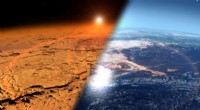
* The Role of Gravity: Gravity is a force of attraction between any two objects with mass. The Earth has a large mass, so it exerts a strong gravitational pull on everything around it, including the air in its atmosphere.
* The Atmosphere's Escape Velocity: The speed at which an object needs to travel to escape the gravitational pull of a planet is called the escape velocity. For Earth, this is about 11.2 kilometers per second (7 miles per second). Air molecules, although constantly moving, don't reach this speed.
* Gas Pressure and Gravity: The air in our atmosphere is made up of molecules constantly bouncing around and colliding with each other. This creates a pressure that pushes outwards. Gravity counteracts this outward pressure, keeping the air molecules bound to Earth.
* Atmospheric Layers: The Earth's atmosphere is divided into layers, with density decreasing as you move higher. This is because gravity's pull is weaker further away from the Earth's surface. The outermost layer, the exosphere, is very thin and some molecules can escape into space.
Think of it this way: Imagine a balloon filled with air. The rubber of the balloon is like gravity, holding the air molecules inside. If the rubber were to break, the air would escape. Similarly, if Earth's gravity were to weaken significantly, the atmosphere would slowly leak out into space.
Here are some important points to remember:
* The Earth's atmosphere is constantly losing some of its air to space due to the escape of some molecules. This is a very slow process, however.
* Other factors like solar wind can also strip away some atmospheric particles.
* The strength of a planet's gravity determines how much atmosphere it can hold. Smaller planets with weaker gravity tend to have thinner atmospheres.
So, while gravity doesn't physically "hold" the air, it plays a crucial role in keeping our atmosphere from escaping and creating a breathable environment.