Here's why:
* Earth's Atmosphere: The Earth's atmosphere blocks out a significant portion of the electromagnetic spectrum, including much of the infrared, ultraviolet, and X-ray radiation emitted by stars.
* Distortion: The atmosphere also causes light to scatter and distort, making images blurry. This effect is known as "seeing."
* Advantages of Space Telescopes: By being above the atmosphere, space telescopes can:
* Observe the full spectrum of light from stars without distortion.
* Achieve significantly higher resolution images.
* Observe fainter objects and celestial phenomena.
Examples of Famous Space Telescopes:
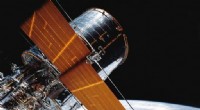
* Hubble Space Telescope: Orbits Earth and has revolutionized our understanding of the universe.
* James Webb Space Telescope: Currently operating, it's the largest and most powerful space telescope ever built.
* Spitzer Space Telescope: Observed in infrared light, allowing us to see through dust clouds and study the formation of stars and planets.
So, while ground-based telescopes are valuable for studying stars, space telescopes provide a much more complete and detailed view of the universe.