* Earth's Atmosphere: Our planet has a thick atmosphere that acts as a shield against most incoming space debris. Smaller meteoroids burn up upon entry, creating shooting stars. Larger objects might survive entry but are significantly slowed down and broken up, resulting in smaller impacts.
* Geological Activity: Earth has active plate tectonics and volcanism, which constantly reshape the surface. Old craters get buried under lava flows, eroded by wind and water, or subducted into the mantle. This constant geological activity "erases" impact craters over time.
* Erosion: Earth's weather, including rain, wind, and ice, constantly erodes the surface, further obliterating craters.
* Impact Frequency: While all celestial bodies are subject to impacts, the frequency of impacts is lower for Earth compared to the Moon and Mercury. This is partly due to Earth's size and gravitational pull, which attract more space debris.
In contrast, the Moon and Mercury:
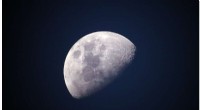
* No Atmosphere: Both bodies lack a significant atmosphere, offering no protection against incoming objects.
* Limited Geological Activity: The Moon is geologically inactive, while Mercury has some volcanic activity, but it's not nearly as widespread as Earth's. This means craters are preserved for eons.
* No Erosion: Lacking weather and erosion, impact craters on the Moon and Mercury remain pristine for millions of years.
In summary, Earth's atmosphere, geological activity, and erosion work together to erase impact craters, while the Moon and Mercury have no such protective mechanisms, leaving their surfaces scarred with the history of collisions.