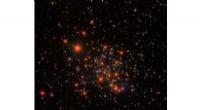
* Gravity: Stars are held together in galaxies by the force of gravity. Every star pulls on every other star, causing them to move in complex orbits around the galactic center.
* Galaxy Rotation: Our own Milky Way galaxy is a spiral galaxy that rotates. This means that stars in the galaxy are constantly moving in a circular or elliptical path around the galactic center.
* Proper Motion: Stars also have their own individual motion, called "proper motion," which is a slow movement across the sky as seen from Earth. This motion is caused by their individual velocities through space.
* Stellar Evolution: As stars age and evolve, they may change their positions relative to other stars. For example, stars can explode as supernovae, dramatically changing their location.
It's Important to Note:
* The Scale of Motion: While stars move, their motion is incredibly slow compared to the vast distances between them. Even with the fastest stars, we wouldn't notice any significant changes in their relative positions over a human lifetime.
* Perspective: Our perspective from Earth makes it appear as if stars are fixed in the night sky, but this is an illusion. Just as the Earth rotates around the Sun, the Sun and our entire solar system are moving through the galaxy.
Observing Stellar Motion:
* Long-Term Observations: Astronomers can track the movement of stars over long periods (centuries or even millennia) and see the gradual shifts in their positions.
* Astrometric Satellites: Space-based telescopes, like Gaia, are specifically designed to precisely measure the positions and motions of stars.
So, while the movement of stars may be slow and subtle, it is a constant and fundamental aspect of the universe.