Here's why:
* Distance: Stars and planets are incredibly far away. While the light rays from a single point source might seem parallel over a short distance, over vast distances, the rays diverge significantly.
* Angle of Emission: Light from stars and planets is emitted in all directions. Therefore, the rays reaching Earth from a specific point on the celestial object are not parallel.
Why the misconception?
The misconception that light from stars and planets is parallel might arise from:
* Simplified diagrams: Often, in astronomy diagrams, the light rays from distant objects are drawn parallel for simplicity. This is a useful simplification, but it doesn't reflect the real-world situation.
* Apparent parallelism: From our perspective on Earth, the light from stars and planets appears to come from a single point in the sky. This can make it seem as if the rays are parallel, even though they are not.
In reality:
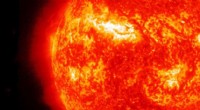
Light from stars and planets is divergent, meaning the rays spread out as they travel towards Earth. This divergence is why we can see different parts of the Sun (like sunspots) and different features on planets like Jupiter (like the Great Red Spot).
Example:
Think about a flashlight. If you shine it directly at a wall, the light beam appears parallel. However, if you shine it at a distant wall, the beam will spread out, and the light rays will no longer be parallel.