The Basics of Orbit
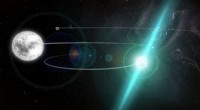
An orbit is a curved path an object takes around another object due to gravity. Think of it like a cosmic dance where gravity is the choreographer. Here's how it works:
1. Gravity: Gravity is the force of attraction between any two objects with mass. The more massive an object, the stronger its gravitational pull.
2. Forward Motion: The object being pulled into orbit needs to be moving forward (horizontally). This motion is crucial because it prevents the object from simply falling straight down towards the larger object.
3. Balance: The key to a stable orbit is a balance between the object's forward motion and the pull of gravity. If the object is moving too slowly, gravity will pull it down. If it's moving too fast, it will fly off into space.
Creating an Orbit
There are a few ways to get an object into orbit:
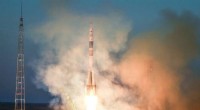
* Rockets: This is the most common method. Rockets provide the initial powerful thrust to launch an object into space. They are designed to propel the object to the necessary speed and altitude for it to enter orbit.
* Gravity Assist: This is a clever technique where a spacecraft uses the gravity of a planet or moon to change its speed and direction. The spacecraft "swings" around the planet, gaining or losing speed, allowing it to reach a new orbit.
Types of Orbits
Orbits come in many shapes and sizes, but the most common is a circular orbit. There are also:
* Elliptical orbits: These are egg-shaped and can vary in their distance from the object they are orbiting.
* Geostationary orbits: These are circular orbits above the Earth's equator where the satellite stays above the same point on Earth's surface.
* Polar orbits: These orbits pass over both the Earth's North and South poles.
Understanding Orbits in Action
* The Moon orbits the Earth: Gravity keeps the Moon in orbit around Earth, while the Moon's forward motion prevents it from falling into Earth.
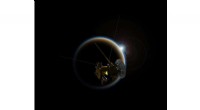
* Satellites orbiting Earth: These provide communication, navigation, and weather monitoring. They use rockets for initial launch and are designed to stay in specific orbits.
* Planets orbiting the Sun: The Sun's gravity keeps the planets in their orbits.
Key Points to Remember:
* Gravity is the force behind all orbits.
* Objects need to be moving forward to stay in orbit.
* The balance between forward motion and gravity is crucial for a stable orbit.
* There are different types of orbits, each serving different purposes.
Let me know if you want to explore a specific type of orbit or have any other questions!