The Hertzsprung-Russell (HR) diagram plots the luminosity and temperature of stars, providing a powerful tool to understand their evolution and characteristics. Here's how the Sun compares to other stars on this diagram:
Similarities:
* Main Sequence: The Sun, like most stars, sits on the main sequence of the HR diagram. This means it's fusing hydrogen into helium in its core, generating energy and maintaining its stability.
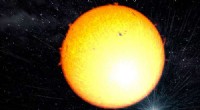
* Average Size and Temperature: Compared to other stars, the Sun is an average size star with an average temperature. It's neither a giant nor a dwarf, and its surface temperature is around 5,500°C.
* Lifetime: The Sun's lifespan is also relatively average. It will spend approximately 10 billion years on the main sequence before evolving into a red giant.
Differences:
* Luminosity: The Sun's luminosity is relatively low compared to many stars. Giant and supergiant stars are much more luminous, while smaller, cooler stars are less luminous.
* Mass: The Sun's mass is also relatively average. Larger, more luminous stars have significantly greater mass, while smaller, cooler stars have much lower mass.
* Color: The Sun appears yellow-white, which is typical for stars on the main sequence. Stars cooler than the Sun appear redder, while hotter stars appear bluer.
* Evolutionary Stage: While the Sun is currently in the middle of its main sequence lifetime, other stars can be in various stages of their evolution. Stars younger than the Sun might be in the early stages of the main sequence, while stars older than the Sun may have already evolved off the main sequence into red giants or white dwarfs.
Location on the HR Diagram:
The Sun's position on the HR diagram is plotted around the middle of the main sequence, categorized as a G-type star. This area represents stars with a surface temperature around 5,000 - 6,000°C and luminosity similar to the Sun. Other stars on the HR diagram can be:
* Red Dwarfs: These small, cool stars are located at the bottom right corner of the HR diagram. They have low luminosity and long lifespans.
* Blue Giants: These massive, hot stars are located at the top left corner of the HR diagram. They have extremely high luminosity and short lifespans.
* Red Giants: These evolved stars are located at the top right corner of the HR diagram. They are cooler but larger than the Sun, resulting in high luminosity.
In summary: While the Sun is an average star in many ways, it occupies a specific position on the HR diagram that reflects its characteristics and evolutionary stage. Comparing it to other stars helps us understand the diversity of stars and their evolution across the universe.