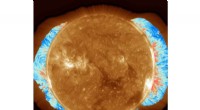
* Sun: The Sun is primarily composed of hydrogen (about 71%) and helium (about 27%), with trace amounts of other elements. These light elements were the most abundant in the early solar nebula.
* Terrestrial Planets: Terrestrial planets, such as Earth, Mars, Venus, and Mercury, are mainly composed of heavier elements like iron, nickel, silicon, and oxygen. These elements are less abundant than hydrogen and helium, but they condensed closer to the Sun where temperatures were higher.
Here's why the difference in composition exists:
1. Formation: The Sun formed from the collapse of a massive cloud of gas and dust called the solar nebula. This cloud was mostly composed of hydrogen and helium. As the cloud collapsed, the core of the Sun became hot and dense enough to start nuclear fusion, which releases energy and keeps the Sun shining.
2. Distance from the Sun: The terrestrial planets formed closer to the Sun where it was too hot for lighter elements like hydrogen and helium to condense. These lighter elements were blown away by the solar wind, leaving behind the heavier elements to form the rocky planets.
In summary: The Sun is a giant ball of hydrogen and helium, while the terrestrial planets are rocky bodies composed of heavier elements because of the difference in temperature and pressure during their formation.