Here's why:
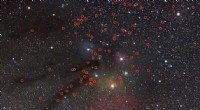
* Stars are giant balls of hot gas that produce their own light and heat through nuclear fusion. They are massive, with immense gravitational pull that draws in and holds together all that gas.
* Planets are celestial bodies that orbit stars. They are much smaller than stars and do not produce their own light. They reflect the light of their host star.
There are exceptions:
* Some stars, called brown dwarfs, are smaller than some planets. These are objects too large to be planets but too small to be stars, and they lack the internal pressure and temperature to start nuclear fusion.
* Jupiter, the largest planet in our solar system, is larger than some smaller stars. But it is still significantly smaller than our Sun and most other stars.
In summary: While there are exceptions, stars are generally much larger than planets.