1. Seeing through dust and gas:
* Dust and gas obscure visible light: Much of the interstellar medium (the space between stars) is filled with dust and gas. These materials absorb and scatter visible light, making it difficult to see distant objects like stars that lie behind them.
* Infrared penetrates dust: Infrared radiation, with its longer wavelength, can pass through dust and gas more easily. This allows astronomers to see stars and other objects that would be hidden in visible light.
2. Studying star formation:
* Cool objects radiate in infrared: Young stars and protoplanetary disks (disks of gas and dust around newborn stars) are relatively cool objects. They emit most of their radiation in the infrared part of the spectrum.
* Understanding star evolution: Infrared observations help astronomers understand how stars form and evolve over time.
3. Studying stellar surfaces and atmospheres:
* Surface temperature and composition: Stars emit different amounts of infrared radiation depending on their temperature and composition. Infrared observations can provide information about a star's surface temperature, composition, and other properties.
* Stellar activity: Infrared observations can also reveal details about stellar activity, such as flares and coronal mass ejections.
4. Observing distant galaxies:
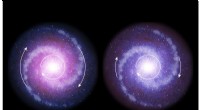
* Redshifting of light: As distant galaxies move away from us, their light is stretched to longer wavelengths, shifting it toward the red end of the spectrum. This effect, called redshift, makes many distant galaxies appear brighter in the infrared than in visible light.
* Galaxy evolution: Infrared observations allow astronomers to study galaxy formation, evolution, and the distribution of matter in the universe.
5. Detecting exoplanets:
* Heat signature: Exoplanets often emit infrared radiation due to their internal heat or the heat they receive from their parent star. Infrared observations can help astronomers detect and characterize exoplanets.
In summary, infrared observations offer astronomers a unique perspective on the universe, allowing them to see through dust and gas, study the formation and evolution of stars and galaxies, and detect exoplanets.