1. Above the Atmosphere:
* No atmospheric distortion: Earth's atmosphere is constantly in motion, causing twinkling and blurring of light from stars and distant objects. Hubble, orbiting above the atmosphere, avoids these distortions completely, resulting in much sharper images.
* No light pollution: Cities and other sources of light pollution on Earth scatter light, making it difficult to see faint objects. Hubble is above all this, enjoying a pristine view of the cosmos.
2. Advanced Optics:
* Larger primary mirror: Hubble's 2.4-meter primary mirror collects more light than most ground-based telescopes, allowing it to see fainter objects and capture finer detail.
* Precisely shaped mirror: Hubble's mirror is shaped to a remarkable accuracy, ensuring that light is focused perfectly, minimizing blurring and distortion.
* Advanced instruments: Hubble is equipped with a suite of sophisticated cameras and spectrometers, allowing it to observe in different wavelengths of light, including visible light, ultraviolet, and infrared.
3. Regular Servicing:
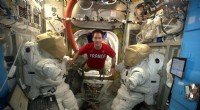
* Upgrades and repairs: Hubble has been visited by astronauts multiple times, allowing for upgrades, repairs, and the installation of new instruments. These interventions have kept Hubble at the forefront of astronomical research and extended its lifetime.
4. Long Exposure Times:
* No time limits: Because it's in space, Hubble can take extremely long exposures, capturing faint light that would be undetectable on Earth. This allows astronomers to see incredibly distant and faint objects.
In summary, Hubble's location above the atmosphere, its advanced optics, regular servicing, and the ability to take long exposures combine to produce images of exceptional clarity and detail, revealing the universe like never before.