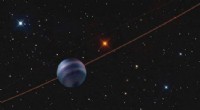
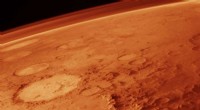
* We know very little about most planets: We've only directly imaged a handful of planets outside our solar system. Most are discovered indirectly, through their gravitational influence on their stars. We know their size, mass, and sometimes orbital period, but not much else about their surface conditions, atmosphere, or potential for life.
* "Bad" is subjective: What makes a planet "bad" depends on what you value. For example, a planet with extreme temperatures, radiation, or volcanic activity might be considered "bad" for humans, but perfectly fine for other life forms.
* Habitability is complex: Even within our solar system, planets vary drastically in their suitability for life as we know it. Venus is a scorching hellscape, while Mars is a cold and barren desert.
However, here are some planets that might be considered "bad" based on our current understanding:
* Planets very close to their stars: These planets are often tidally locked, meaning one side always faces the star, leading to extreme temperature differences between the two sides.
* Planets with very short orbits: These planets experience extreme gravitational forces and tidal stresses, which can cause significant geological activity and even disrupt their atmospheres.
* Planets in binary star systems: The gravitational forces from two stars can make it challenging for planets to form and maintain stable orbits.
* Planets with very massive stars: Massive stars have short lifespans and emit intense radiation, which can make it difficult for life to evolve on nearby planets.
It's important to remember that even a planet considered "bad" for human life might be a perfect home for other life forms. The universe is incredibly diverse, and we're just beginning to explore the possibilities.