Here's why:
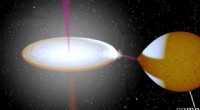
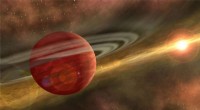
* Large: Red giants are much larger than our Sun, often with diameters hundreds of times greater.
* Reddish: They appear reddish due to their relatively cool surface temperature (around 3,500-5,000 K).
* Late in its life cycle: Red giants represent a stage where stars have exhausted most of the hydrogen fuel in their core and have begun fusing heavier elements, causing them to expand and cool.
Note: While red giants are the most common type of late-stage star, other types exist, like red supergiants, which are even larger.