General Star Observations:
* Brighter Stars: You'll see the familiar twinkling of stars, but with greater clarity and detail. Even brighter stars may show a slight disk-like shape instead of just a point of light.
* Faint Stars: Telescopes reveal many more stars that are too faint to see with the naked eye. You can explore vast star fields and see the Milky Way in incredible detail.
* Star Clusters: These are groups of stars that are gravitationally bound together. You can see open clusters, which are loosely packed and relatively young, and globular clusters, which are tightly packed and very old.
* Double and Multiple Stars: Some stars appear as single points of light to the naked eye, but through a telescope, you can see they are actually two or more stars orbiting each other.
Beyond Stars:
* Planets: You can see the planets of our solar system as bright, disk-like objects. Some telescopes can even reveal details on the surface of planets like Jupiter and Saturn.
* Nebulae: These are clouds of gas and dust in space. Some are glowing brightly, while others are dark and appear as silhouettes against the background of stars.
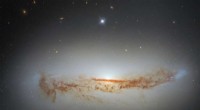
* Galaxies: Beyond our own Milky Way, powerful telescopes can reveal other galaxies as fuzzy patches of light.
* Deep Sky Objects: This is a broad category that includes everything beyond our solar system, from distant galaxies to supernova remnants.
A Note on Observation:
* Light Pollution: Light pollution from cities can make it difficult to see fainter objects, so try to find a dark location for the best views.
* Magnification: The magnification of your telescope determines how large an object appears in your view. You may need to adjust the magnification depending on the object you are viewing.
Remember, observing the night sky is an ongoing journey of discovery! With each observation, you'll learn more about the vastness and wonder of the universe.