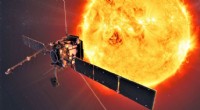
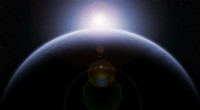
* Close proximity to the Sun: Mercury is the closest planet to the Sun, and its strong gravitational pull makes it difficult for any natural satellite to remain in a stable orbit.
* Weak gravity: Mercury's relatively small size and low mass result in a weak gravitational pull, making it difficult to capture and retain a moon.
* Past gravitational interactions: It's possible that in the early solar system, Mercury may have had a moon, but it was disrupted by gravitational interactions with the Sun or other planets.
Essentially, Mercury is too close to the Sun and too small to hold onto a moon.