Natural Light Sources:
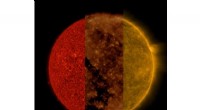
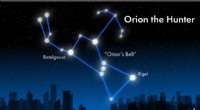
* Stars: The most common light source in space, stars are massive balls of hot gas that produce their own light through nuclear fusion.
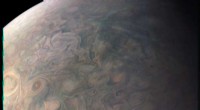
* Planets: Planets themselves don't emit their own light, but they reflect light from nearby stars. Some planets also possess atmospheres that can scatter and refract light, creating unique atmospheric phenomena.
* Galaxies: Galaxies are massive collections of stars, gas, dust, and dark matter. The combined light of all the stars within a galaxy creates a luminous glow.
* Nebulae: Nebulae are clouds of gas and dust in space. They can be illuminated by nearby stars, or they can glow on their own due to the ionization of gases.
* Supernovae: The explosive death of a star, a supernova releases an enormous amount of light and energy, briefly outshining entire galaxies.
* Quasars: These are extremely bright, distant objects powered by supermassive black holes at the centers of galaxies. They are the most luminous objects in the universe.
Artificial Light Sources:
* Spacecraft: Many spacecraft are equipped with artificial lights for navigation, communication, and scientific instruments.
* Space Stations: Space stations like the International Space Station have interior lights for astronauts to live and work.
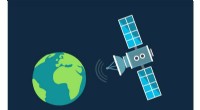
* Satellites: Some satellites use light for communication purposes, such as lasers for data transmission.
Other Light Phenomena:
* Gravitational Lensing: The immense gravity of massive objects like galaxies or black holes can bend and focus light from distant objects, creating optical illusions.
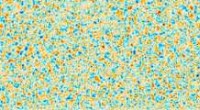
* Cosmic Microwave Background Radiation: This faint afterglow of the Big Bang is a source of low-energy light that permeates the entire universe.
Interesting Facts:
* The color of a star is determined by its temperature. Hotter stars tend to be blue, while cooler stars are red.
* The Milky Way galaxy, our home galaxy, is a spiral galaxy with a central bar. It appears as a faint band of light across the night sky.
* There are billions of galaxies in the observable universe.
This is just a glimpse into the diverse and fascinating world of light sources in space. Astronomers are constantly discovering new and amazing phenomena that illuminate our understanding of the universe.