1. Light from the Sun:
* The moon itself doesn't produce light. We see it because its surface reflects sunlight.
* The amount of light reflected depends on the moon's phase (new moon, full moon, etc.).
2. Entering the Eye:
* Light from the moon enters the eye through the pupil, a small opening in the iris.
3. Focusing and Image Formation:
* The cornea and lens focus the light onto the retina, a light-sensitive layer at the back of the eye.
* The lens can adjust its shape to focus light from different distances, which is why we can see objects both near and far.
4. Light-Sensitive Cells:
* The retina contains two types of light-sensitive cells:
* Rods: Sensitive to low light levels, responsible for night vision.
* Cones: Responsible for color vision and sharp detail. They require more light to function.
5. Signal Transmission:
* When light strikes the rods and cones, it triggers a chemical reaction that creates electrical signals.
* These signals travel along the optic nerve to the brain.
6. Interpretation in the Brain:
* The brain receives the signals from the optic nerve and interprets them as the image of the moon.
* The brain also takes into account factors like the moon's position in the sky, its brightness, and its color to create a complete perception.
Key Points:
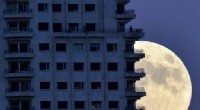
* Brightness: The moon appears brightest when it is full. This is because the entire sunlit hemisphere of the moon is facing Earth.
* Color: The moon's color can appear white, yellowish, or even reddish depending on atmospheric conditions (like dust or haze).
* Adaptation: Our eyes are very adaptable. We can see the moon even in the dark because our pupils dilate, allowing more light to enter the eye.
In Summary:
The human eye works like a camera, gathering light from the moon, focusing it, and converting it into signals that the brain interprets. This process allows us to see the moon in the night sky and appreciate its beauty.