1. Observation and Data Collection:
* Remote Sensing: Satellites capture images and data from Earth and other celestial bodies, providing information on:
* Earth Observation: Climate change, weather patterns, natural disasters, deforestation, pollution, agriculture, and urban development.
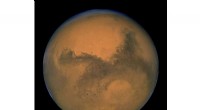
* Planetary Science: Surface features, composition, atmospheres, and geology of planets, moons, and other celestial objects.
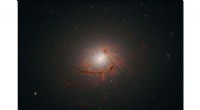
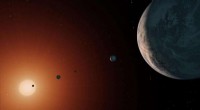
* Astronomy: Studying stars, galaxies, and the universe's evolution.
* Telescopes in Space: Satellites house powerful telescopes like Hubble, which are unaffected by Earth's atmosphere, allowing for clearer and sharper images of distant objects.
2. Communication and Navigation:
* Communication Satellites: Relaying signals for phone calls, internet access, TV broadcasts, and emergency services.
* Navigation Satellites (like GPS): Providing precise location data for navigation systems, mapping, and timekeeping.
3. Space Missions and Exploration:
* Orbiting Platforms: Satellites serve as observation points and research labs, studying Earth's environment, testing new technologies, and conducting experiments in space.
* Spacecraft Propulsion: Some satellites are used to propel spacecraft further into the solar system using gravity assists.
4. Scientific Research and Understanding:
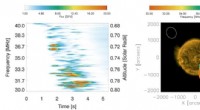
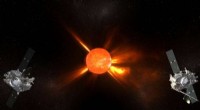
* Studying the Sun: Satellites observe solar flares, coronal mass ejections, and the Sun's magnetic field, helping us understand its impact on Earth.
* Investigating the Magnetosphere: Satellites study Earth's magnetic field and its interaction with the solar wind, shielding us from harmful radiation.
* Mapping the Universe: Satellites like Gaia help us understand the structure and evolution of the Milky Way galaxy.
5. Space Weather Forecasting:
* Monitoring Solar Activity: Satellites monitor the Sun for solar storms, which can disrupt communication and power grids on Earth.
* Space Weather Predictions: Providing timely warnings about potential space weather events that could affect satellites and astronauts.
In conclusion, satellites are essential tools for exploring space. They allow us to observe the universe from a unique vantage point, gather valuable data, communicate across vast distances, and conduct scientific research that pushes the boundaries of our understanding.