Here are the primary ways scientists study Jupiter up close:
1. Flybys:
* Pioneer 10 and 11: The first spacecraft to fly by Jupiter, they provided the first close-up images and data about the planet's atmosphere and magnetic field.
* Voyager 1 and 2: These missions provided even more detailed images and data, including the discovery of volcanic activity on Io, one of Jupiter's moons.
2. Orbiters:
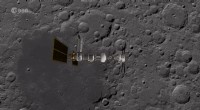
* Galileo: The first spacecraft to orbit Jupiter, Galileo provided detailed observations of the planet's atmosphere, moons, and magnetic field.
* Juno: Currently orbiting Jupiter, Juno is studying the planet's internal structure, magnetic field, and gravitational field.
3. Atmospheric probes:
* Galileo's atmospheric probe: This probe plunged into Jupiter's atmosphere, providing data about its composition, temperature, and pressure.
4. Telescopes:
* Hubble Space Telescope: From Earth orbit, Hubble can capture high-resolution images of Jupiter, its moons, and its atmosphere.
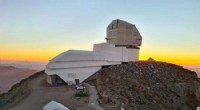
* Ground-based telescopes: Telescopes on Earth can be used to study Jupiter's atmosphere, magnetic field, and its moons.
Data Collection Methods:
* Cameras: To capture images of Jupiter and its moons.
* Spectrometers: To analyze the composition of Jupiter's atmosphere and its moons.
* Magnetometers: To study Jupiter's magnetic field.
* Radio waves: To study Jupiter's ionosphere and magnetic field.
* Gravity measurements: To study Jupiter's internal structure.
By combining data from these various methods, scientists are able to gain a comprehensive understanding of Jupiter and its place in our solar system.