Here's what we know:
* Many stars have planets: It's now widely believed that most stars have at least one planet orbiting them.
* Different types of planets: Exoplanets come in a wide variety of sizes, compositions, and orbits. Some are gas giants like Jupiter, while others are rocky like Earth.
* Our solar system is not unique: The discovery of exoplanets has shown that our solar system is just one example of many different planetary systems out there.
How are exoplanets discovered?
There are several methods used to detect exoplanets, including:
* Transit Method: This involves looking for dips in a star's brightness as a planet passes in front of it.
* Radial Velocity Method: This detects the wobble in a star's motion caused by the gravitational pull of an orbiting planet.
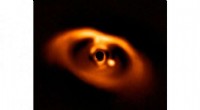
* Direct Imaging: This involves taking pictures of planets directly, which is very challenging but possible for some large, young planets.
What's next?
Scientists are continuing to discover and study exoplanets to learn more about their formation, evolution, and potential for hosting life. It's an exciting field of research with the potential to revolutionize our understanding of our place in the universe.